

Quick answer: Backyard landscaping cost in 2026 usually lands between $3,000 and $20,000+. A simple cleanup and planting refresh might stay near the low end. A full backyard with patio, lawn work, lighting, irrigation, and custom planting can move well beyond that.
Backyard projects get expensive because they rarely stay single-scope for long. You start by wanting a nicer patio edge. Then the lawn looks tired next to it. Then the lighting feels weak. Then you realize the planting beds need irrigation or you'll be dragging hoses around forever. That's how a modest refresh turns into a serious backyard investment.
The good news is you can usually control the cost if you break the project into parts. I like starting with the landscaping cost calculator to frame the whole job, then pricing each element so the budget doesn't drift. For visual planning, the garden design ideas guide is also useful before you lock yourself into one style.
Backyard Landscaping Cost at a Glance
| Backyard element | Typical 2026 price range | Notes |
|---|---|---|
| Basic cleanup and planting refresh | $3,000 to $6,000 | Mulch, bed cleanup, modest new plants, light lawn repair |
| Mid-range backyard upgrade | $7,000 to $15,000 | New planting, lawn work, small patio, lighting, edging |
| Full backyard transformation | $15,000 to $40,000+ | Patio, major planting, irrigation, lighting, grading, custom features |
| New patio | $3,000 to $12,000+ | Material and size drive cost the most |
| Irrigation installation | $1,500 to $4,500 | Varies by zones, trenching, and controller type |
| Landscape lighting | $1,500 to $6,000 | Basic path lights to full low-voltage systems |
These are solid homeowner budgeting ranges for 2026. Local labor, access, and material choices can swing the total quite a bit.
What Most Backyards Actually Cost
A realistic backyard landscaping budget for a typical homeowner is often $7,000 to $15,000. That's the middle ground where the project is noticeable and useful, not just cosmetic. You may be adding a modest patio, refreshing or replacing part of the lawn, improving the beds, installing a few lights, and fixing irrigation weak spots.
Under $5,000, you're usually looking at selective improvements. Cleanup, mulch, some plants, and maybe a small section of lawn repair. Over $20,000, the job usually includes serious hardscape, custom construction, grading, drainage, or a fully redesigned outdoor living setup.
Cost Breakdown by Backyard Element
This is where the budget really gets clearer. Backyard landscaping is not one price. It's a stack of mini-projects.
Lawn and turf
Lawn work can be fairly cheap or surprisingly expensive, depending on whether you're repairing, reseeding, sodding, or regrading.
| Lawn item | Typical price range |
|---|---|
| Lawn repair and patching | $500 to $2,000 |
| Sod installation | $1,500 to $5,000+ |
| Reseeding and soil prep | $800 to $2,500 |
| Regrading before lawn install | $1,000 to $4,000+ |
A tired lawn often makes the whole yard feel unfinished. If you're comparing patio and lawn spend, remember that a good hardscape looks harsher when the turf around it is struggling.
Patio and hardscape
Patios are usually the biggest single line item because material, excavation, and base prep add up fast.
| Patio type | Typical price range |
|---|---|
| Small gravel or simple pad area | $1,500 to $4,000 |
| Concrete patio | $3,000 to $8,000 |
| Paver patio | $4,000 to $12,000+ |
| Premium natural stone patio | $8,000 to $20,000+ |
If you're sketching sizes and don't want to underbuy materials, the paver calculator is genuinely useful. Patio costs jump when access is tight, the site is sloped, or retaining edges are needed.
Plants and planting beds
Plants are flexible. That's why this category can either protect your budget or wreck it.
| Planting item | Typical price range |
|---|---|
| Small bed refresh | $500 to $2,500 |
| Medium shrub and perennial install | $2,000 to $6,000 |
| Larger layered planting plan | $5,000 to $12,000+ |
Container size matters. So does plant count. A few strategic shrubs and perennials can look great. Filling every corner with instant-size material gets expensive fast.
Lighting
Lighting is one of those upgrades homeowners often skip at first, then wish they hadn't. It makes a backyard usable and polished.
| Lighting scope | Typical price range |
|---|---|
| Small path-light setup | $1,500 to $2,500 |
| Mid-range accent lighting system | $2,500 to $4,500 |
| Full backyard low-voltage design | $4,500 to $6,000+ |
The lighting calculator helps if you're trying to estimate fixture counts before getting quotes.
Irrigation
Irrigation matters even more when you're spending good money on new plants.
| Irrigation item | Typical price range |
|---|---|
| Small zone repair | $150 to $600 |
| Partial backyard irrigation | $800 to $2,500 |
| Full backyard irrigation install | $1,500 to $4,500 |
The irrigation calculator is useful if you're planning zones and coverage before the job is built.
What Pushes Backyard Costs Higher
Size is only part of it
A small backyard with tight access, built-in seating, drainage work, and premium materials can cost more than a larger open yard with a simple layout.
Grading and drainage
This is the silent budget killer. If water is moving toward the house, pooling near the patio, or washing out beds, the pretty stuff has to wait. Drainage and grading aren't flashy, but they're often the smartest money in the project.
Material choices
Budget gravel and standard concrete keep costs grounded. Premium pavers, natural stone, custom edging, and oversized specimen plants do the opposite.
Site access
If crews can roll straight into the backyard, costs stay more reasonable. If everything has to be hand-carried through a side gate, labor rises.
Feature creep
This happens on almost every backyard project. You decide to add one thing because the crew is already there, then another, then another. The extra work may be worth it, but it's what makes budgets drift.
DIY Savings, and Where DIY Backfires
DIY can save real money in a backyard, especially on cleanup, mulch spreading, simple planting, and finishing touches. If you're willing to do the labor, you can shave a meaningful chunk off the budget.
Good DIY candidates:
- Bed cleanup and old plant removal
- Mulch spreading
- Basic planting in prepared beds
- Outdoor furniture styling
- Small gravel paths or simple decor changes
Better left to pros:
- Patio base prep and compaction
- Grading and drainage fixes
- Irrigation layout and trenching
- Electrical work for lighting
- Large tree or major shrub installation
I've seen plenty of DIY patios that looked okay for a month and then settled unevenly after the first season. That's the problem with backyard work. Mistakes don't always show up right away.
Regional Pricing Differences
Backyard landscaping prices move a lot by region in 2026.
| Region | Typical full-project range |
|---|---|
| Midwest | $5,000 to $18,000 |
| South | $5,500 to $20,000 |
| Northeast | $8,000 to $30,000+ |
| Mountain West | $6,000 to $22,000 |
| West Coast | $8,000 to $35,000+ |
Higher-cost areas usually have pricier labor, stricter permitting, and more expensive materials. Drought-prone areas may also shift more of the budget toward irrigation upgrades, gravel, and lower-water planting.
Why a Phased Backyard Plan Usually Wins
Phasing is one of the smartest ways to handle a backyard project. You don't need to do everything at once to get a great result.
A sensible order often looks like this:
- Fix layout and drainage first
- Build hardscape second
- Install irrigation and lighting third
- Finish with planting and styling
That order protects your work. You don't want to plant first and then tear the yard up for trenching or patio excavation.
A phased plan also helps you spread cost across seasons. Maybe this year is patio plus grading. Next year is planting plus lighting. That's often easier to absorb than trying to finance the full dream backyard in one shot.
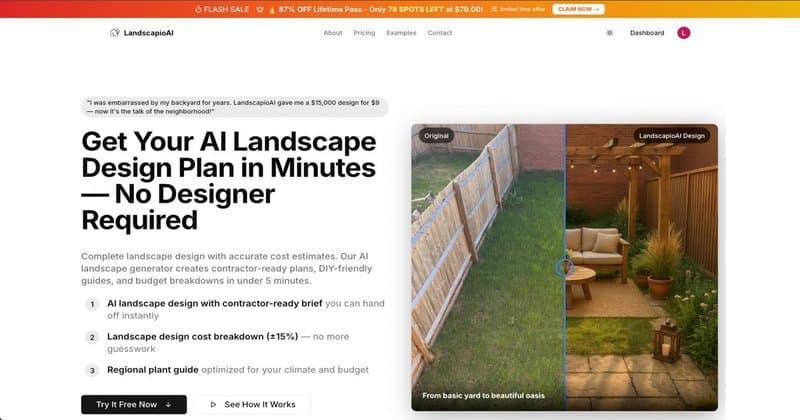
Before you commit, I like testing layout ideas with the AI landscape design tool. It helps you compare styles and avoid spending money on a backyard that still doesn't feel right. When you're ready to move beyond sketches, start your design and build a plan that fits the yard you actually have.
And if you want one more fast gut check before talking to contractors, open https://www.landscapioai.com. Seeing a few directionally different concepts can keep you from locking into a layout too early.
Frequently Asked Questions
How much does backyard landscaping cost in 2026?
Most homeowners spend $3,000 to $20,000+ on backyard landscaping in 2026. The final number depends on how much patio work, planting, lighting, irrigation, grading, and drainage the project includes.
What is the cheapest way to improve a backyard?
The cheapest high-impact approach is usually cleanup, mulch, selective planting, and focused lawn repair. That gives you a visible upgrade without jumping straight into heavy construction.
How much does a backyard patio add to the budget?
A backyard patio usually adds about $3,000 to $12,000 or more. Size, material, access, and base prep are the biggest cost drivers.
Is it cheaper to landscape a backyard in phases?
In many cases, yes. Phasing lets you tackle the most important work first and spread the cost over time without losing the big-picture plan.
Why do backyard landscaping quotes vary so much?
The main reasons are project size, grading, drainage needs, access, material quality, and how much hardscape, lighting, irrigation, and planting is included.