

Quick answer: Most homeowners spend $5,000–$15,000 on a new deck in 2026, with typical per-square-foot costs ranging from $15–$35 for pressure-treated wood and $30–$60+ for composite. A standard 16x20 deck in pressure-treated wood runs $8,000–$12,000 fully installed.
Building a deck is one of the better investments you can make in your yard. It adds usable outdoor space, bumps your home's resale value, and costs a fraction of what an indoor addition would run. The tricky part is figuring out what you'll actually pay before you start calling contractors.
The national pricing references are in the same ballpark but not identical. Fixr puts the national average at $14,000, with basic builds starting around $1,500 and large premium projects reaching $40,000. Bob Vila cites an average of $7,913 and a common range of $4,141 to $11,713, while Angi frames deck builds around size, material, and labor rather than one flat number. The gap is normal. One source may be pricing a basic platform deck, while another is rolling in railings, stairs, permits, or composite boards.
This guide breaks down deck building costs by size, material, and every add-on that quietly inflates the final number. You'll also find out when you need a permit, how to get quotes that are actually comparable, and how a deck stacks up against a patio if you're still deciding. If you want to rough out your own numbers first, our deck calculator is a useful starting point before you compare bids.
Average Deck Building Costs
The national average for a new deck in 2026 sits around $9,000–$13,000, but that number covers a huge range of projects. A basic 10x10 ground-level deck in treated pine could come in under $2,500. A multi-level composite deck with built-in seating and a pergola can push $40,000+.
Here's how to think about it:
- Labor: $8–$22 per square foot, depending on your region and the deck's complexity
- Materials: $7–$45 per square foot, depending on what you pick
- Permits and inspections: $150–$1,200, depending on your municipality
- Footings and framing: Usually included in labor quotes, but worth confirming
For most standard decks, materials account for 40–50% of the total cost. Labor makes up the other half, and it doesn't fluctuate nearly as much as material prices do.
A few benchmarks help keep quotes grounded. Fixr says installed deck costs usually land around $15 to $55 per square foot, depending on material and complexity. Bob Vila puts most homeowners at $30 to $60 per square foot for a new deck, with labor alone often running $15 to $35 per square foot. Those numbers are higher than bare material cost because they usually include framing, footings, layout, and cleanup.
You can get a rough total using our landscaping cost calculator if you want a quick ballpark before talking to anyone.
Cost by Deck Size
Size is the single biggest cost driver. Bigger decks mean more materials and more labor hours, but you do get some economy of scale on larger projects since setup costs are fixed.
| Deck Size | Sq Ft | Pressure-Treated Wood | Composite | Cedar |
|---|---|---|---|---|
| 10x10 | 100 | $1,500–$3,500 | $3,000–$6,000 | $2,500–$4,500 |
| 12x16 | 192 | $2,900–$6,700 | $5,800–$11,500 | $4,800–$8,600 |
| 16x20 | 320 | $4,800–$11,200 | $9,600–$19,200 | $8,000–$14,400 |
| 20x20 | 400 | $6,000–$14,000 | $12,000–$24,000 | $10,000–$18,000 |
Ranges include labor and materials. Permits, railings, and stairs are extra.
A 16x20 deck (320 sq ft) is the most common size for a back patio deck. It gives you room for a table and chairs plus a small lounge area without blowing the budget.
Cost by Material
Material choice is where budgets either stay on track or spiral. Here's how each option breaks down:
Pressure-Treated Wood: $15–$35 per sq ft installed
This is what most decks are built from, and for good reason. It's strong, widely available, and cheap compared to everything else. The "pressure-treated" part means it's been chemically treated to resist rot and insects, so it'll last 15–25 years with basic maintenance (sealing every 2–3 years).
The main downside: it's not the prettiest material. It starts grayish-green and needs staining if you want it to look polished. It also has a tendency to warp and crack as it dries out in the first year.
Composite (Trex, Fiberon, TimberTech): $30–$60 per sq ft installed
Composite decking is made from a mix of wood fiber and recycled plastic. It's more expensive upfront but needs almost zero maintenance. No sealing, no staining, just occasional cleaning. Most composite products carry 25–30 year warranties.
The cost gap versus pressure-treated wood is real, but it narrows over time when you factor in that you won't spend $500–$1,000 every few years on maintenance.
Cedar: $25–$45 per sq ft installed
Cedar is the middle ground: naturally resistant to rot (no chemical treatment needed), looks much better than pressure-treated pine, and costs less than composite. The catch is that supply is inconsistent in some regions, which can push prices up. Cedar also requires the same staining and sealing routine as pressure-treated wood.
Tropical Hardwood (Ipe, Teak, Mahogany): $45–$75 per sq ft installed
Ipe in particular is exceptionally dense and durable, with a natural lifespan of 40+ years when maintained. But you pay for it. Installation is also harder because tropical hardwoods are so dense that contractors need special tools to work with them. Worth it for a forever home; probably overkill for a starter house.
PVC/Vinyl: $25–$50 per sq ft installed
Pure PVC (no wood fiber) is 100% waterproof and nearly maintenance-free. It holds up well in humid climates and resists fading better than composite in direct sun. The trade-off is that it can feel hollow underfoot and expand noticeably in heat, which sometimes causes gaps or buckling if it's not installed correctly.
What Drives the Price Up
The per-square-foot estimates above cover a basic flat deck. Here's what adds to the final bill:
Railings: $15–$85 per linear foot, depending on material. Basic pressure-treated wood railings are cheapest. Cable railings, glass panels, and aluminum systems cost significantly more. A 16x20 deck might need 50–70 feet of railing: that's $750–$5,950 just for the railing.
Stairs: $100–$400 per step, installed. A standard staircase of 3–5 steps runs $400–$2,000. More steps, or curved or floating designs, push that higher.
Permits and inspections: Most jurisdictions require a permit for decks over a certain size (often 200 sq ft) or decks attached to the house. Expect $150–$1,200 depending on where you live. Some areas also require a structural engineer's stamp if the deck is elevated.
Height and elevation: Ground-level decks are cheaper to build. Elevated decks (second-story or over sloped ground) need taller posts, more substantial footings, and more labor. A raised deck can cost 20–30% more than an equivalent ground-level deck.
Soil and site conditions: Rocky soil or a heavily sloped yard means more work digging footings. If you're building on a slope, you may also need to plan for a retaining wall before the deck goes in. Use our retaining wall calculator to figure out what stabilizing that slope might cost.
Concrete footings: Every deck needs them. They're poured in place and go several feet below the frost line. For most decks, footings add $500–$2,000 to the total. Use our concrete calculator to estimate how much concrete your footings will need before your contractor quotes you.
Built-in features: Built-in seating ($50–$100 per linear foot), a pergola ($3,000–$8,000), outdoor lighting ($200–$1,000+), and storage benches all add to the cost but also add a lot of usability.
Deck vs Patio: Which Is Cheaper?
Patios are almost always cheaper per square foot than decks. A basic concrete patio runs $8–$18 per square foot. Even paver patios, which look great, typically land between $15–$30 per square foot installed.
Decks cost more because of the structural work: footings, framing, joists, decking boards on top. A patio just gets poured or laid on a prepared surface.
That said, decks have real advantages in certain situations:
- Sloped yards: If your yard drops away from the house, a deck is often the only practical way to create a level outdoor space. A patio on a slope requires extensive grading and retaining walls, which can erase the cost advantage quickly.
- Access from the house: Decks typically sit at or near door height, making the transition from inside to outside easy. Patios on sloped ground often require steps down to reach them.
- Elevation and views: A raised deck gives you a better vantage point over the yard or neighborhood.
If your yard is flat and you're purely comparing costs, a patio wins. Check out our patio cost calculator to compare estimates side by side. We also have a full breakdown in our patio cost guide if you want to get into the material comparisons in detail.
Do You Need a Permit for a Deck?
In most places, yes. Here's what typically triggers a permit requirement:
- The deck is attached to the house (almost always requires a permit)
- The deck is above a certain height off the ground (often 30 inches)
- The deck exceeds a certain size (many areas set this at 200 sq ft)
Permit costs range from $150 to $1,200+ depending on your city or county. The process usually involves submitting plans, paying the fee, and having an inspector check the footings and framing before you cover them up.
Skipping the permit is a bad idea. If something goes wrong (a structural failure, an injury, or even just a neighbor complaint), you're liable. And when you sell the house, an unpermitted deck can complicate the transaction or require you to tear it down.
Your contractor should know what's required in your area and typically handles the permit application. If they suggest skipping it to save time, that's a red flag.
How to Get Accurate Quotes from Contractors
Getting 3 quotes is the standard advice, and it's right. Deck quotes can vary 30–50% for the same job depending on the contractor's overhead, how busy they are, and what's included in the base price.
To get quotes that are actually comparable:
Specify everything in writing. Send each contractor the same description: deck size, material, railing type, stair count, whether you need footings or they're existing, and any built-in features. Quotes for vaguely described projects aren't comparable.
Ask what's included. Does the quote cover permits? Footings? Removal of an old deck? Finishing and sealing? Get a line-item breakdown, not just a total number.
Ask about the warranty. Reputable contractors typically warrant their labor for at least 1–2 years. Materials carry their own manufacturer warranty, but installation errors (like footings that shift or boards that buckle) should be covered by the contractor.
Check their portfolio. Ask to see completed decks similar to what you want. Deck construction looks straightforward but it's easy to do badly. Gaps between boards, posts that aren't plumb, railings that wobble: all signs of sloppy work.
Don't just take the cheapest quote. On a $10,000 project, the cheapest contractor might be $1,500 cheaper but use inferior materials or cut corners on footings. Footings that fail mean the whole deck needs to come down.
A homeowner in r/landscaping shared that they were quoted $13,200 for a 200-square-foot composite deck in Berkeley, while another commenter said they had paid $7,500 for a 120-square-foot wood deck. That does not mean either price is right for your yard, but it is a good reminder that deck bids swing wildly by market, material, and access.
Use Our Patio Cost Calculator
Not sure yet whether you want a deck or a patio? Our patio cost calculator lets you punch in your dimensions and material choice to get an instant cost estimate. It's a good starting point before you call any contractors.
If you're planning a larger outdoor project (deck plus landscaping, grading, planting), our landscaping cost calculator can help you see the full budget picture in one place.
FAQ
How much does a 12x16 deck cost?
A 12x16 deck (192 sq ft) typically costs $2,900–$6,700 for pressure-treated wood or $5,800–$11,500 for composite, fully installed. That range includes labor and materials but not permits, railings, or stairs, which can add $2,000–$5,000 depending on what you need.
Is composite decking worth the extra cost?
For most homeowners, yes. Composite costs 2–3x more upfront than pressure-treated wood, but you'll spend almost nothing on maintenance over the next 25 years. With wood, you're looking at sealing or staining every 2–3 years at a few hundred dollars a time. The break-even point is usually 8–12 years.
How long does it take to build a deck?
A standard ground-level deck takes 3–7 days for an experienced crew. Larger or elevated decks take longer, especially if footings need time to cure (typically 24–48 hours before framing begins). Factor in permit approval time too: some areas process permits in a few days, others take 3–6 weeks.
What size deck do I need?
A 10x10 works for a small bistro table and two chairs. For a full outdoor dining set (6 people), you need at least 12x14. For a dining area plus lounging space, plan for 16x20 or larger. A good rule of thumb: add 10–15 sq ft per person you want to comfortably accommodate.
Can I build a deck myself to save money?
Yes, and a confident DIYer can save 40–60% on labor. The catch: you still need a permit, you'll need to pass inspections, and mistakes on footings or framing are expensive to fix. For elevated or attached decks, most people are better off hiring a pro. If you want to split the work, consider letting a contractor handle the structural work and doing the finishing (staining, sealing, built-ins) yourself.
DIY vs Professional Deck Build
If the project is a simple ground-level platform in pressure-treated wood, DIY can make financial sense. You are mostly saving labor, and on a small deck that may be several thousand dollars. But once the project is attached to the house, elevated off the ground, or using premium composite with hidden fasteners and custom railings, mistakes get expensive fast.
A practical middle ground is to price both routes. Use our deck calculator for the structure itself, compare footings with the concrete calculator, and if you are still deciding whether a deck is the right move, compare it against our patio cost guide. In plenty of yards, the cheapest outdoor living upgrade is not a cheaper deck. It is a patio instead.
Design Your Outdoor Space
Once you know the budget, the fun part starts: figuring out the layout, the materials, and how your deck fits into the rest of your yard.
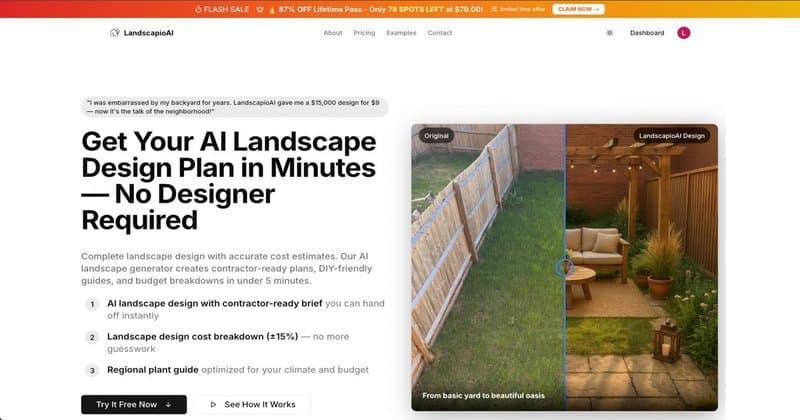
LandscapioAI lets you design your outdoor space with AI so you can visualize exactly what your deck, patio, or landscaping will look like before anyone breaks ground. Upload a photo of your yard, describe what you want, and get a realistic design in minutes. It's free to try.
Cost estimates in this guide reflect national averages for 2026. Prices vary by region, contractor, and material availability. Always get multiple quotes before committing.