


Quick answer: In 2026, French drain installation cost usually falls between $1,500 and $8,000 for a residential project, and many standard yard jobs land around $3,000 to $4,000. Short shallow drains can cost less, while long deep systems with difficult excavation, lots of gravel, or complex discharge routing can cost far more.
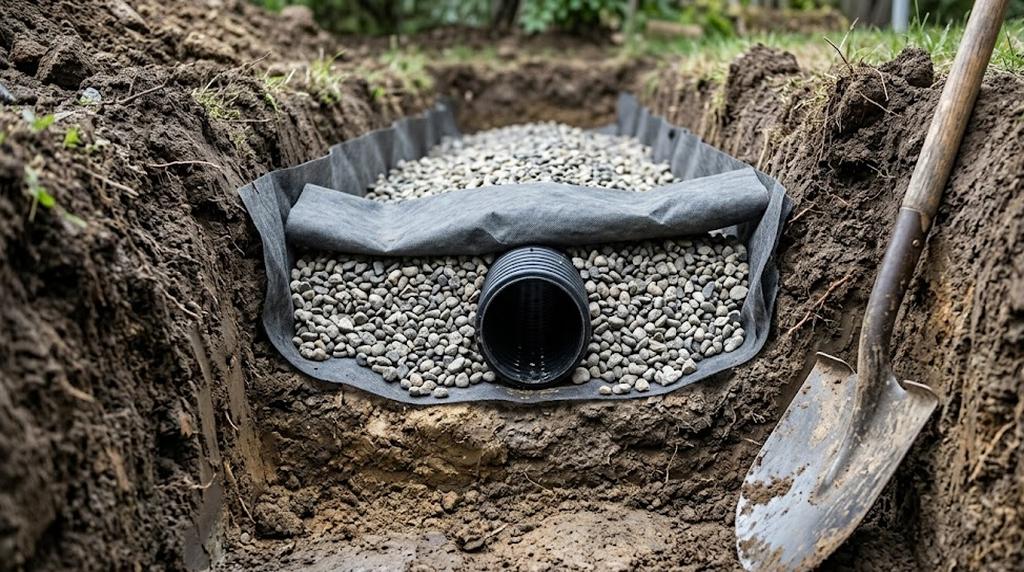
A French drain sounds simple on paper: dig a trench, add fabric, lay perforated pipe, cover it with gravel, and move water away. The problem is that drainage work only looks easy until you start digging. Soil, slope, water volume, discharge location, and trench depth can change the price fast.
If your yard stays soggy after every storm or water keeps creeping toward the foundation, this guide will help you understand the real numbers before you call a drainage contractor.
Average French Drain Installation Cost in 2026
Published contractor data and homeowner quote ranges still support a wide national spread, but most standard residential yard systems cluster in the middle. Recent search results from Angi show $10 to $100 per linear foot, averaging about $45, while HomeAdvisor reports a similar $10 to $100 per linear foot range for installation.
| French drain project | Typical installed cost |
|---|---|
| Small problem-area drain | $1,500 to $2,500 |
| Standard yard French drain | $2,500 to $4,500 |
| Larger perimeter or side-yard drain | $4,500 to $8,000 |
| Deep or difficult drainage project | $8,000 to $15,000+ |
| DIY materials for a short run | $300 to $1,200 |
A lot of contractors also think in cost per linear foot, which often lands around $25 to $75 installed for common residential conditions. That midpoint lines up with broader search-result benchmarks from CostSignals, which pegs many 100-foot jobs around $2,500 to $6,500.
If you are budgeting several outdoor fixes at once, check the landscaping cost calculator before you commit. Drainage work is one of those hidden line items that can quietly consume the money you thought was going toward turf, beds, or a patio refresh.
French Drain Cost by Length
Length is the first cost driver most homeowners understand, because a longer drain means more trenching, more pipe, more gravel, and more labor.
| Drain length | Typical installed cost |
|---|---|
| 20 to 30 feet | $1,500 to $2,500 |
| 30 to 50 feet | $2,000 to $4,000 |
| 50 to 80 feet | $3,500 to $6,000 |
| 80 to 120 feet | $5,000 to $8,000+ |
These ranges assume typical residential access and ordinary trench depth. If the crew has to work around fencing, hardscape, or large roots, the installed price per foot often climbs. Search-result data from U.S. News also shows exterior perimeter drains commonly pricing at $10 to $50 per linear foot, with higher costs once access or routing gets harder.
French Drain Cost by Depth and Complexity
Depth matters just as much as length because deeper trenches are slower, heavier, and harder to grade correctly.
| Job type | Typical cost | Why it changes |
|---|---|---|
| Shallow surface-intercept drain | $1,500 to $3,000 | Less digging, easier spoil handling |
| Standard yard drain | $2,500 to $4,500 | Most common residential scope |
| Deep foundation-adjacent drain | $4,000 to $8,000+ | More excavation, more risk, more cleanup |
| Drain with catch basins and tie-ins | $5,000 to $10,000+ | Added materials and layout work |
A shallow drain for a wet lawn corner is a very different project from a deeper system designed to protect the base of a retaining wall or move water away from a crawlspace. That is why broad online averages can be misleading if you do not know the actual scope. For interior systems, Forbes Home notes that basement-style French drains can run $40 to $100 per linear foot, which shows how quickly deeper and more complex projects jump in price.
What Affects French Drain Installation Cost?
These are the variables that move the quote most.
1. Soil type
Soft loam is easier to excavate than compacted clay or rocky ground. Clay also drains poorly, which sometimes means the contractor recommends more gravel, a wider trench, or additional drainage components.
2. Trench depth and width
A narrow shallow trench is much cheaper than a deep trench with enough width for proper pipe bedding and gravel wrap. More excavation also means more soil to haul or spread.
3. Pipe size and material
Many residential systems use 4-inch perforated pipe, but larger water loads or longer runs may justify bigger pipe or heavier-duty materials. The price difference in materials is not always huge, but it affects fittings and labor.
4. Gravel volume
French drains need washed gravel or stone around the pipe so water can move freely. On longer or deeper runs, gravel quantity becomes a meaningful part of the budget. You can estimate that material with our gravel calculator before you talk to installers.
5. Filter fabric and assembly quality
A drain is only as good as the way it is wrapped and protected from sediment. Cheap installs sometimes skip or rush the fabric step, which can shorten the life of the whole system.
6. Access to the work area
An open side yard is cheaper than a fenced backyard with narrow access, established beds, irrigation lines, and no room for small excavation equipment.
7. Outlet location
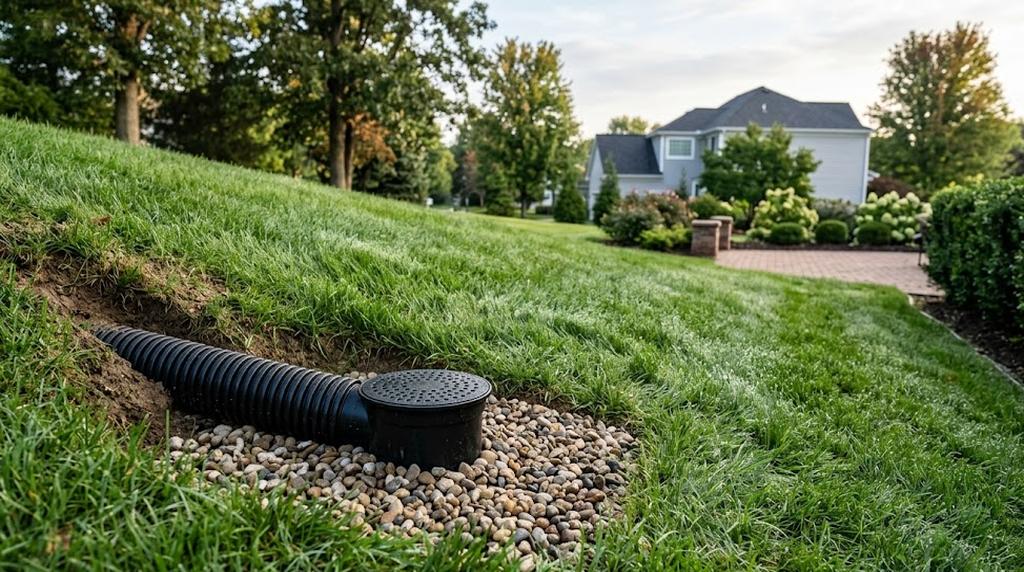
Water has to go somewhere. If the drain can daylight on a slope, the system is usually simpler. If the contractor has to route to a pop-up emitter, dry well, or approved discharge location, cost rises.
8. Permits and utilities
Some jurisdictions require permits or utility locates for drainage work, especially if the drain connects to stormwater infrastructure or runs near the house. Utility marking is not optional.
French Drain Cost by Project Type
Homeowners use the term French drain for a few different jobs. These are the most common.
| Project type | Typical cost |
|---|---|
| Backyard soggy-area drain | $1,500 to $3,500 |
| Side-yard interceptor drain | $2,000 to $4,500 |
| Foundation-adjacent drain | $4,000 to $8,000+ |
| Retaining wall or slope drain | $3,000 to $7,000 |
| Full perimeter drainage upgrade | $6,000 to $15,000+ |
If drainage issues are tied to hardscape, walls, or grading, compare the numbers with our retaining wall cost guide. Water problems often connect multiple yard systems, not just one trench. You can also sanity-check total site work with our landscaping cost calculator and pressure-test material quantities with the drainage calculator.
DIY vs Hiring a Pro
French drains sit in that awkward middle ground where DIY is possible, but mistakes are expensive.
| Option | Typical cost | Pros | Cons |
|---|---|---|---|
| DIY short drain | $300 to $1,200 | Lower cash cost, doable for small areas | Backbreaking labor, easy to get slope wrong |
| DIY with mini-excavator rental | $500 to $2,000+ | Faster digging | Rental logistics, still easy to install incorrectly |
| Professional installation | $1,500 to $8,000+ | Better grading, better drainage design, less risk | Higher upfront price |
When DIY can work
A short shallow drain in an open yard is the best DIY candidate. If you understand pitch, have a clear daylight outlet, and can work safely around utilities, you may save money.
When to hire a pro
Hire a pro when the project is long, deep, close to the foundation, or tied to other grading problems. Bad drainage work does not just fail quietly. It can move water to the wrong place and make your yard worse.
Recent homeowner search snippets tell the same story:
"I installed about 100 feet of exterior french drain about 4 feet deep by doing much of the work myself with 2 friends and hiring out a little bit. Total cost under $1000." — r/HomeImprovement
"I was recently quoted $2,200 for a 25 ft. length of 'shallow' French drain..." — r/landscaping
This is also one of the cases where design matters. Before you spend thousands on drainage and then guess at the rest of the yard, you can use LandscapioAI to map how lawn, beds, paths, and outdoor living zones should work once the wet problem area is fixed.
How to Save Money on French Drain Installation
There are smart ways to control the budget without underbuilding the system.
Fix the right problem
Sometimes a drainage contractor is solving standing water that is really a grading or gutter discharge issue. Make sure the diagnosis is right before you approve a longer drain than you need.
Combine drainage with other yard work
If you already plan to regrade, rebuild beds, or redo a side yard, combining the work often saves money on labor and restoration.
Keep the route efficient
A shorter cleaner path to discharge usually costs less than a winding route around avoidable obstacles.
Handle finish restoration separately
Some contractors price premium lawn repair into the job. If you are doing broader landscaping afterward, it may be cheaper to keep the drainage scope tight and handle final finish work as part of a bigger project.
Price materials realistically
Pipe is not the expensive part on most jobs. Labor and excavation are. Do not let a low materials number fool you into thinking a long difficult trench should be cheap.
How to Get Accurate Quotes
When calling drainage pros, give them enough detail to scope the job well:
- where water collects
- roughly how long the run may need to be
- whether the area is flat or sloped
- whether there is an easy discharge point
- whether access is open or fenced
- whether the work is near the house, a wall, or utilities
Ask each contractor what is included in the price. That should cover pipe, gravel, fabric, spoil removal, restoration, and any permits or utility coordination.
You can also sanity-check material needs with our drainage calculator, gravel calculator, and landscaping cost calculator before you decide whether a quote feels reasonable.
Frequently Asked Questions
How much does a french drain cost per linear foot?
Most current search-result benchmarks put French drain installation around $10 to $100 per linear foot depending on whether the run is shallow, exterior, interior, or foundation-adjacent. In practical homeowner terms, many standard yard jobs still land in the $25 to $75 per foot range once trenching, gravel, pipe, fabric, and cleanup are included.
Can I install a french drain myself?
Yes, but only some projects are good DIY candidates. A short shallow run in an open yard can be manageable, while long, deep, or foundation-side drains are usually worth hiring out because pitch mistakes, clogged fabric, or bad discharge routing can waste a lot of labor and still fail.
How long does a french drain last?
A well-built French drain can last 20 to 30 years or longer if it uses proper filter fabric, washed gravel, correct slope, and a reliable outlet. Systems fail faster when installers skip fabric, use poor-quality aggregate, or let roots and sediment clog the trench.
Sources
- Angi — French Drain Cost — reports $10 to $100 per linear foot, averaging about $45.
- HomeAdvisor — French Drain Installation Cost — reports a similar $10 to $100 per linear foot range.
- Forbes Home — How Much Does a French Drain Cost? — notes interior French drain systems can cost $40 to $100 per linear foot.
- U.S. News Real Estate — French Drains: How Much They Cost and How They Work — cites exterior perimeter drain pricing around $10 to $50 per linear foot.
- CostSignals — French Drain Installation Cost Calculator — estimates $25 to $65 per linear foot and roughly $2,500 to $6,500 for a 100-foot run.