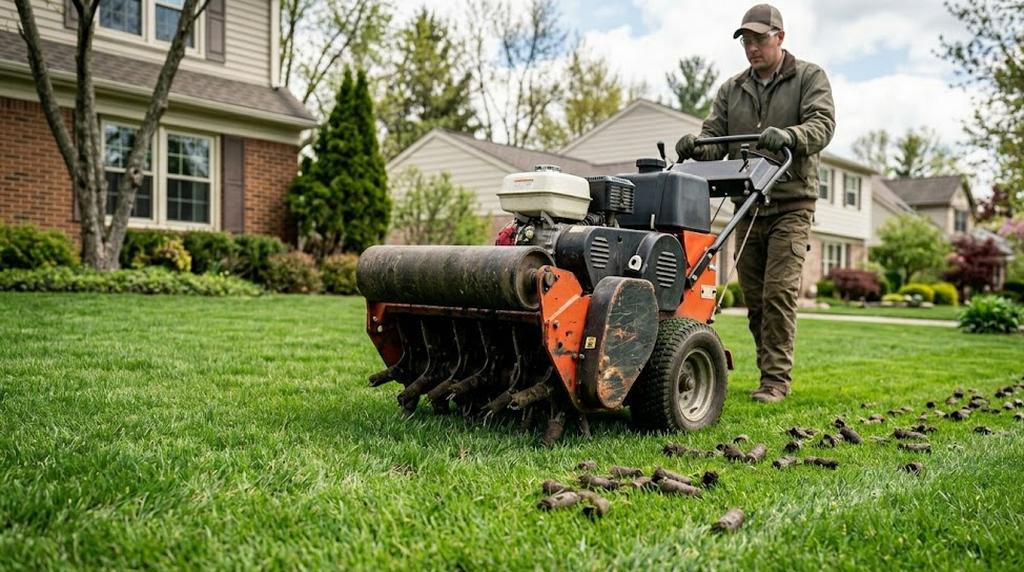
Quick answer: Most homeowners pay about $75 to $300 for a straightforward lawn aeration visit in 2026. If you bundle overseeding, starter fertilizer, or a second pass, the total often lands in the $200 to $500 range instead.
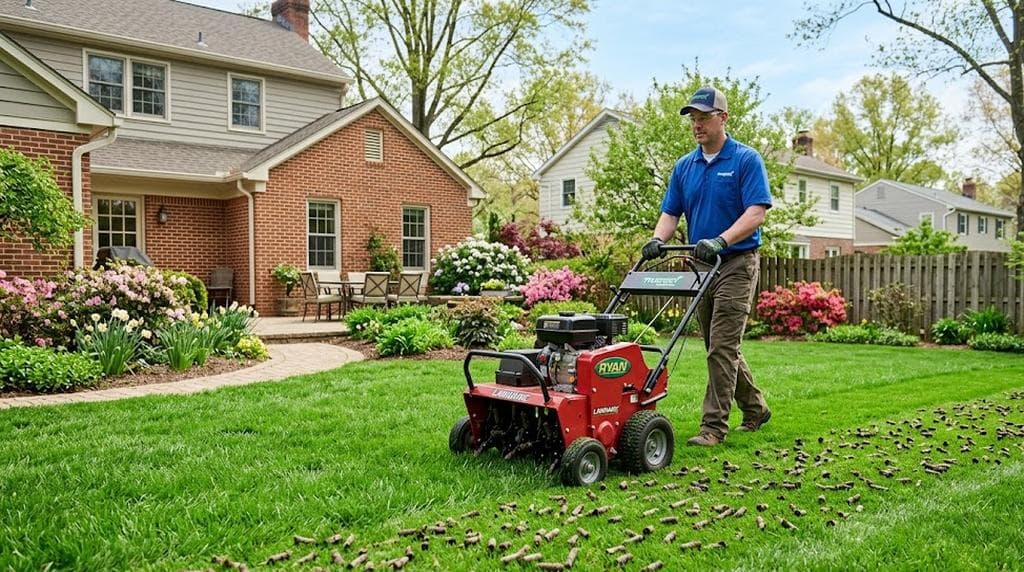
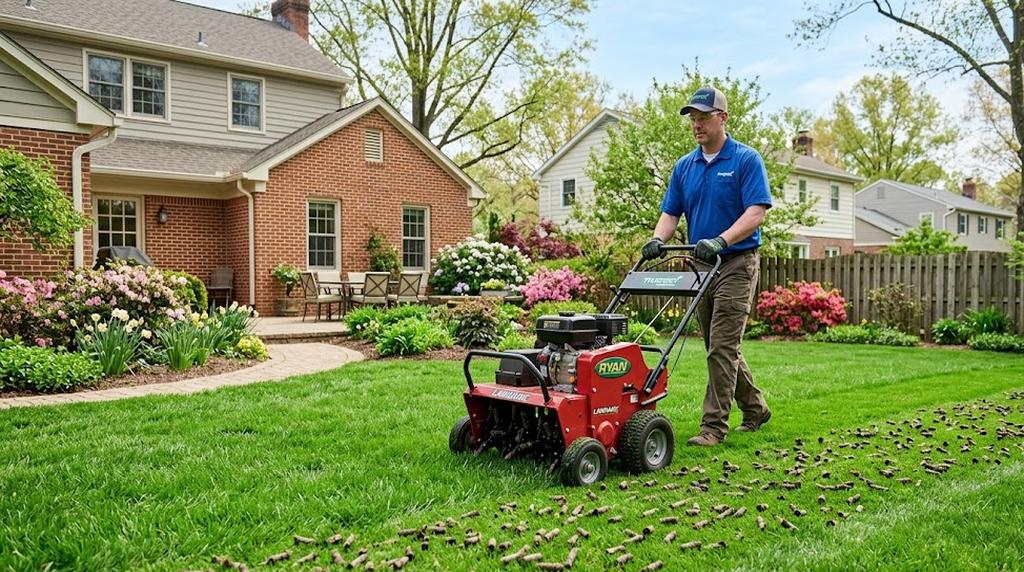
Aeration looks simple from the outside: a machine shows up, punches or pulls holes in the lawn, and leaves behind a yard full of plugs. But the quote can vary a lot depending on lawn size, access, soil compaction, and whether you are paying only for aeration or for a fuller lawn-repair package.
If you are budgeting the full yard rather than just this one treatment, compare the numbers with our lawn mowing cost calculator. It helps you decide whether a one-time aeration visit belongs inside an ongoing maintenance plan or a more complete yard refresh.
Average Lawn Aeration Cost in 2026
Current market pricing still puts basic residential aeration firmly in the low hundreds. Lawn Love’s 2026 pricing guide places the national average around $104 to $195, with many smaller lawns starting near $75 and larger or more involved jobs climbing well above $200.
That lines up with what many homeowners actually see in quotes: the machine service itself is often affordable, but the total rises once the contractor adds seed, fertilizer, dethatching, or multiple passes for compacted turf.
| Aeration service type | Typical 2026 cost |
|---|---|
| Small yard core aeration | $75–$120 |
| Medium yard core aeration | $115–$190 |
| Large yard core aeration | $160–$300 |
| Aeration + overseeding | $200–$400 |
| Aeration + overseeding + fertilizer | $250–$500+ |
For many suburban homes, the realistic budget is about $120 to $200 for aeration alone and $250 to $450 when you are trying to improve a thin or compacted lawn in one visit.
Lawn Aeration Cost by Yard Size
Yard size is still the biggest pricing lever. Most companies either quote by rough lot bucket or by estimated turf area, with minimum service charges protecting their trip time on smaller jobs.
Lawn Love’s 2026 breakdown shows typical ranges of $75 to $120 for about ⅛ acre, $115 to $190 for ¼ acre, $160 to $250 for ½ acre, and $390 to $550 for a full acre.
| Lawn size | Typical core aeration cost |
|---|---|
| Up to 2,000 sq ft | $75–$120 |
| 2,000–5,000 sq ft | $100–$160 |
| 5,000–10,000 sq ft | $140–$220 |
| 10,000–20,000 sq ft | $200–$300 |
| Around 1 acre | $390–$550 |
Small lawns
Small city and townhouse lawns are often cheap to aerate, but they can also be the most distorted by minimum trip pricing. A very small lawn may still get quoted near $75 to $100 because the company has to load equipment, drive over, and unload the machine regardless of turf area.
Medium lawns
This is the sweet spot for residential aeration. If the site has easy access and no major prep work, many medium-size lawns fall into the $115 to $190 band.
Large lawns and estate lots
Larger properties cost more because the machine spends more time on the turf and operators may need multiple passes or a larger aerator. Once you move beyond a standard suburban lot, pricing can jump quickly.
Core Aeration vs Liquid Aeration vs Spike Aeration
Not all aeration quotes are talking about the same thing. That matters because homeowners sometimes compare a low liquid-aeration quote against a more expensive core-aeration quote and assume both services solve the same problem.
Lawn Love currently shows this rough 2026 pricing spread:
| Aeration type | Typical cost | Best use |
|---|---|---|
| Spike aeration | $60–$225 | Light surface relief, sandy soil, smaller jobs |
| Liquid aeration | $90–$145 | Usually marketed as easy add-on service |
| Core aeration | $95–$230 | Best fit for compacted lawns and real soil relief |
The cost gap can make liquid aeration look attractive, but the quality difference matters. Colorado State University PlantTalk is blunt here: there is no chemical substitute for physically relieving soil compaction, which is why traditional core cultivation remains the standard recommendation when compaction is the real issue.
That does not mean every lawn needs the most expensive option every year. It does mean you should ask exactly what kind of aeration is being quoted.
What Drives Lawn Aeration Cost?
Aeration is a simpler service than drainage work or hardscaping, but several variables can still move the quote.
1. Soil compaction and lawn condition
Compacted lawns can need more than one pass, especially in heavy clay or heavily trafficked areas. Clemson Extension notes that compaction restricts water infiltration, oxygen, and root growth, and that core aerification is the most effective cultivation practice for relieving it.
2. Access to the backyard
A flat front lawn with an open gate is the easy version. Narrow side yards, locked gates, steep slopes, or soggy soil all make the job slower and less pleasant, which usually means a higher price.
3. Add-on services
This is where the small invoice becomes a medium invoice. Common add-ons include:
| Add-on service | Typical added cost |
|---|---|
| Overseeding | $75–$250 |
| Starter fertilizer | $50–$150 |
| Dethatching | $100–$300 |
| Topdressing compost | $200–$800 |
| Spot repair / patching | $100–$400 |
Before approving an overseeding package, run the numbers in our grass seed calculator. If fertilizer is part of the quote too, the fertilizer calculator is useful for checking whether the materials line item feels reasonable.
4. Season and timing
The best timing depends on grass type, not just the contractor’s availability. Clemson Extension recommends fall aeration for cool-season grasses and late spring to summer for warm-season grasses when the turf is actively growing. Peak demand windows can make scheduling tighter and sometimes nudge rates upward.
5. Prep work
If the lawn needs mowing, debris cleanup, or dethatching before aeration can happen, some companies charge more. A neglected lawn often produces a bigger total than the homeowner expects.
Typical Invoice for a Mid-Size Lawn
Here is what a realistic 2026 aeration invoice might look like for a mid-size suburban yard.
| Cost item | Typical range |
|---|---|
| Core aeration service call | $120–$180 |
| Double-pass upgrade | $30–$70 |
| Overseeding | $90–$180 |
| Starter fertilizer | $60–$120 |
| Misc. fees / prep | $0–$40 |
| Total with common add-ons | $270–$510 |
That breakdown explains why two homeowners can both say they “paid for aeration” while one spent $145 and another spent $430.
DIY vs Professional Lawn Aeration Cost
DIY can make sense here more than it does with a retaining wall or drainage trench. But the math is closer than many homeowners assume.
Lawn Love’s guide notes that a power core aerator rental is often around $97 to $108 per day, with transport or pickup costs on top. If you decide to overseed the same day, you also need seed, fertilizer, and enough time to finish before the rental clock runs out.
| DIY item | Typical cost |
|---|---|
| Manual aerator tool | $25–$70 |
| Core aerator rental | $97–$108 per day |
| Delivery / pickup | $25–$60 |
| Grass seed | $40–$150 |
| Fertilizer | $30–$100 |
When DIY makes sense
DIY is most defensible when:
- The lawn is small to medium
- You can easily transport or receive the machine
- You already planned to overseed yourself
- You are comfortable with heavy rental equipment
When a pro is usually worth it
A professional is usually worth paying for when:
- The lawn is medium to large
- Access is awkward
- You want overseeding done correctly on the same visit
- The soil is heavily compacted
- You do not want to wrestle a heavy rental machine through gates and slopes
In practice, many homeowners find the labor savings alone justifies the pro quote.
Is Aeration Actually Worth the Money?
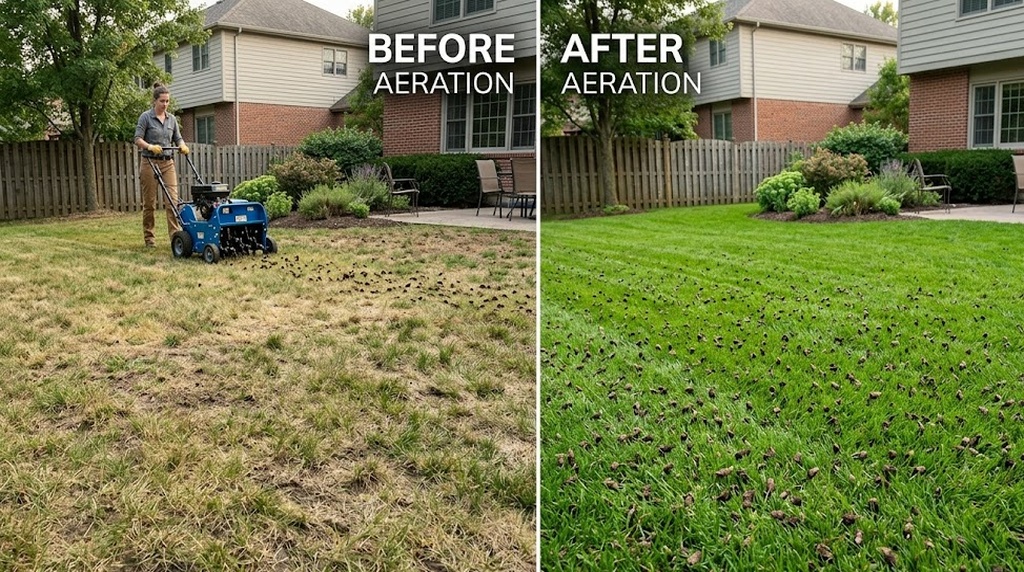
Usually yes, if your problem is real compaction and not something else pretending to be a lawn issue.
Clemson Extension points to the main benefits of core aeration: better oxygen in the root zone, improved water infiltration, better nutrient access, stronger root growth, and reduced runoff. Those are real gains for tired, compacted turf.
What aeration does not do is magically fix every struggling lawn. If the underlying problem is shade, irrigation failure, poor drainage, or bad soil structure, aeration alone may not deliver much visible improvement.
If the lawn is part of a bigger backyard rethink, it may be smarter to start your design before spending repeatedly on treatments that do not solve the real issue.
Regional Price Differences
Labor rates, fuel costs, and lawn size norms still affect aeration pricing by market. Lawn Love’s 2026 city examples show typical totals ranging from the mid-$90s to low-$200s in many U.S. cities, with higher-cost metros pushing toward the top of the range.
| Region | Typical price trend | Notes |
|---|---|---|
| Northeast | +10% to +20% | Strong demand for cool-season lawn services |
| Southeast | Baseline to +10% | Warm-season timing shifts the service window |
| Midwest | Baseline | Competitive lawn-service pricing in many markets |
| Southwest | +5% to +15% | Some metros carry higher labor and trip costs |
| West Coast | +15% to +30% | Higher labor rates and service minimums are common |
How Often Should a Lawn Be Aerated?
There is no single universal answer. Clemson Extension says frequency depends on soil type and traffic, with some lawns needing aeration only every couple of years and heavier, more heavily used lawns needing it annually or more often.
A decent homeowner rule of thumb looks like this:
- Heavy clay + lots of traffic: often every year
- Average suburban lawn: every 1 to 2 years
- Light sandy soil + low traffic: every 2 to 3 years
If a screwdriver sinks into moist soil easily, you may not need aeration right now. If the soil feels like concrete, the lawn ponds after rain, or roots stay shallow, aeration becomes a much stronger bet.
Tips to Spend Less Without Wasting Money
Ask what kind of aeration is actually included
Do not compare a liquid-aeration quote to a core-aeration quote like they are interchangeable.
Measure your turf area accurately
Many homeowners overestimate their lawn size and accept an oversized quote.
Bundle only what the lawn needs
If the lawn is thick and healthy, you may not need overseeding this year. If it is thin and patchy, the extra cost may be worth it.
Water lightly before the service if instructed
Moderately moist soil is easier to aerate well than hard, bone-dry soil.
Compare the total yard plan
If the lawn is only one part of a larger yard spend, compare aeration against your broader lawn care cost guide and your project priorities.
Sources and Homeowner Research
This guide was updated using current 2026 pricing and turf guidance from:
- Lawn Love lawn aeration cost guide
- Colorado State University PlantTalk on liquid lawn aeration
- Clemson Extension aerating lawns guide
FAQ: Lawn Aeration Cost
How much does it cost to aerate a lawn in 2026?
Most homeowners spend $75 to $300 for lawn aeration in 2026, with basic suburban jobs often landing near $120 to $200 and bundled overseeding packages landing higher.
Is lawn aeration worth paying for?
Usually yes if the soil is compacted and the grass is struggling because roots cannot access air, water, and nutrients properly.
Is core aeration better than liquid aeration?
For compacted lawns, usually yes. Colorado State University notes that there is no chemical substitute for physically relieving soil compaction.
What is the cheapest way to aerate a lawn?
For very small lawns, a manual tool is the cheapest route. For medium and large lawns, professional core aeration is often a better value once you count rental, transport, and your time.
How often should lawn aeration be done?
That depends on traffic and soil type. Many average lawns do fine on a 1-to-2-year cycle, while heavier clay lawns may benefit from annual aeration.
If your lawn problems keep coming back, the issue may be bigger than one service visit. Use LandscapioAI to visualize the full yard, then start your design if you need a plan that goes beyond another maintenance invoice.